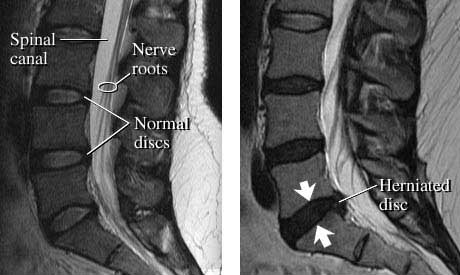
 Plantar fasciitis is the most common cause of heel pain. The plantar fascia is a strong band of tissue (like a ligament) that goes from the heel to the middle foot bones. It supports the arch of the foot and also acts as a shock-absorber.
When patients come to me with what appears to be plantar fasciitis, I like to look at the patient’s gait, how the patient walks and stands, and then I assess the mobility of the feet, ankles, legs, pelvis and back (amongst other things). I try to consider the different structures that may affect the plantar fascia and see how I may be able to help. After treatment, I give advice and exercises most of the time. The advice I give follows the recommendations of a recent study¹ that compared the effects of stretching the plantar fascia every day with high-load strength training every other day.
Both groups wore shoe inserts. The short term effects were significantly better for the stretching group but the middle and long term effects were better for the strengthening group.
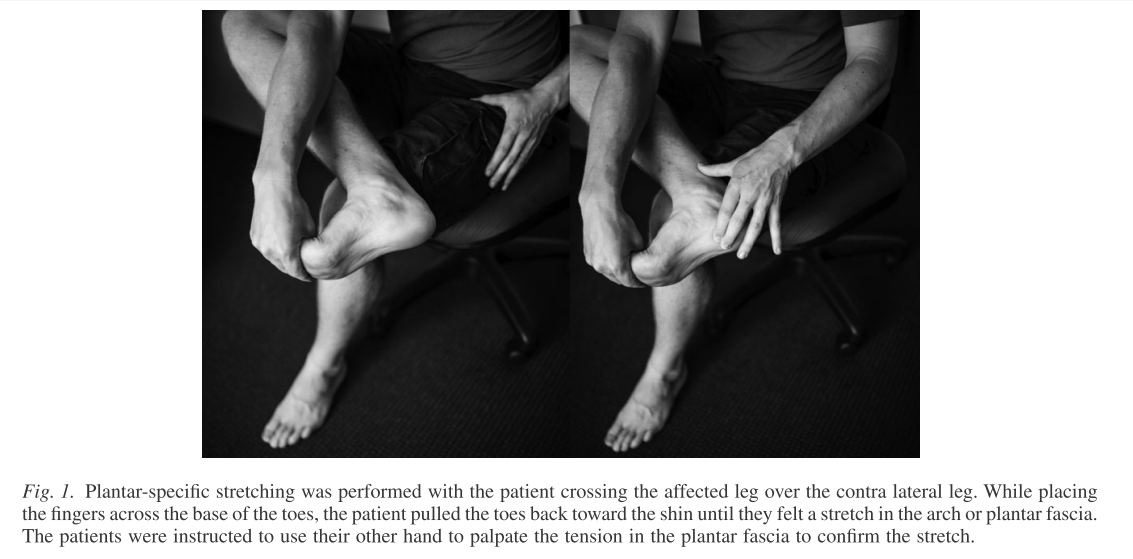
Here is how the exercises were carried out (please note that this post is informative; if you experience similar symptoms, you need to have a proper diagnosis and a health professional to verify that these exercises are suitable for you):
– stretching:
– high load strengthening exercise:

There are different things that need to be also be considered, such as your footwear and the impact of the physical things you do in your life on the plantar fascia. Osteopathy can help restore movement and function to decrease the load on the plantar fascia. More information on first appointments here.
1. M. S. Rathleff, C. M. Mølgaard, U. Fredberg, S. Kaalund, K. B. Andersen, T. T. Jensen, S. Aaskov andJ. L. Olesen. High-load strength training improves outcome in patients with plantar fasciitis: A randomized controlled trial with 12-month follow-up. Scandinavian Journal of Medicine & Science in Sports; early view.
 Chronic prostatitis / chronic pelvic pain syndrome and osteopathy